

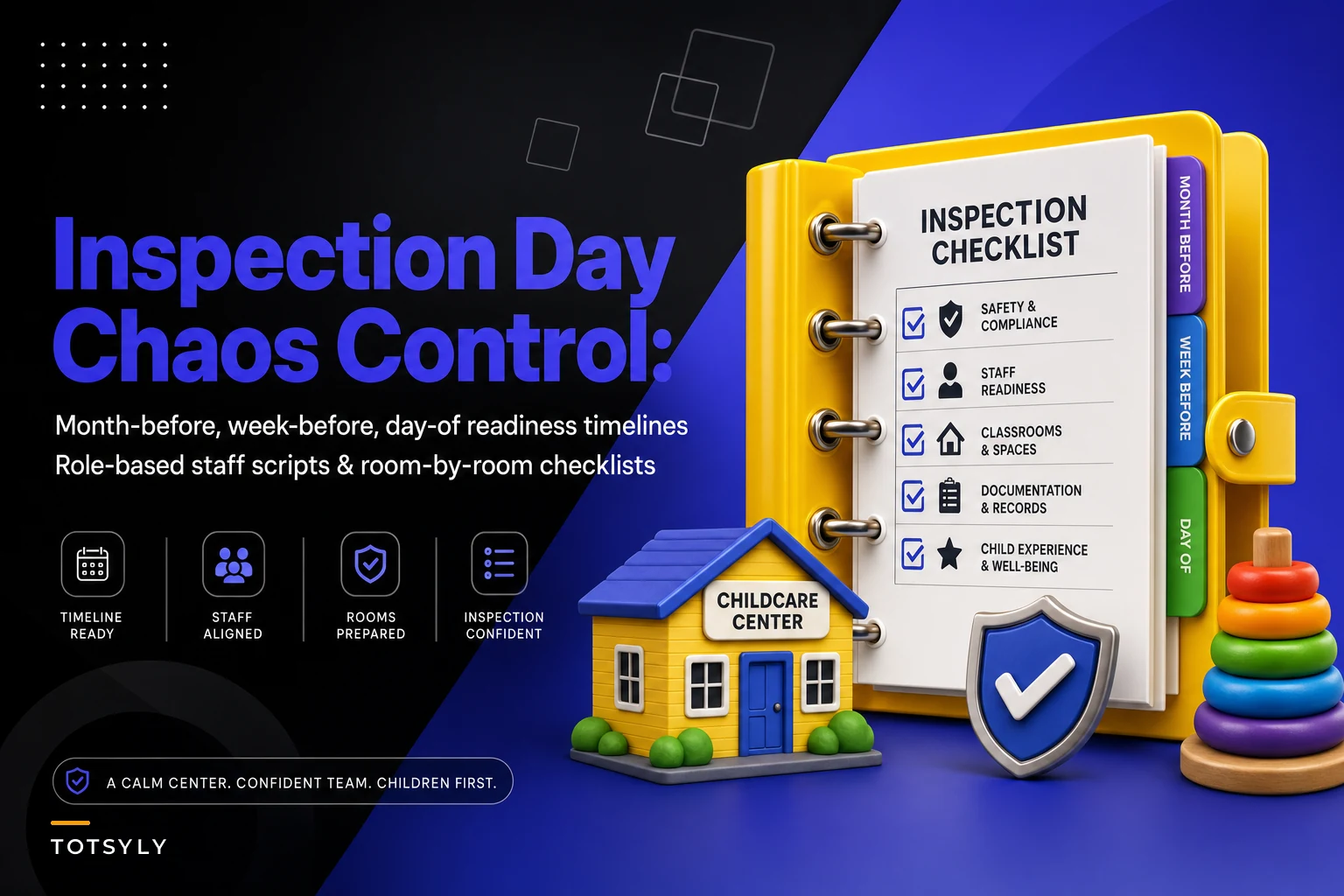

That sinking feeling when you spot the licensing specialist's car in the parking lot unannounced. Your assistant director is scrambling through filing cabinets while lead teachers rush to check classroom documentation. Meanwhile, you're mentally running through every possible violation while trying to look calm.
The difference between smooth inspections and citation-heavy disasters usually comes down to one thing: preparation timelines that actually get followed. Not the generic checklists floating around Facebook groups — specific, role-based workflows that turn inspection readiness into routine operations rather than a last-minute scramble.
The month-before foundation work nobody talks about
Most centers start preparing maybe a week before their inspection window opens. By then, you're already behind. The real work starts 30 days out, when you can still fix systemic issues rather than just hiding symptoms.
Your licensing inspection checklist daycare preparation needs to start with documentation archaeology. Pull every staff file and run it against current requirements — not the ones from when they were hired, but the ones that went into effect last quarter that you may have quietly missed. In Texas alone, centers average three to four requirement changes per year that affect existing staff files. A mandatory training module that became required six months ago and nobody caught? That's a citation waiting to happen.
Classroom observation logs are where most centers discover problems too late. A month out, assign your assistant director to spend 15 minutes in each classroom with the actual observation form your licensing specialist uses. Not a friendly walkthrough — the real checklist. Document everything: the corner where the carpet curls slightly, the handwashing poster that's faded past readability, the sensory bin that hasn't been properly sanitized in weeks.
| Area to review |
|---|
| Your licensing inspection checklist daycare preparation needs to start with documentation archaeology. Pull every staff file and run it against current requirements — not the ones from when they were hired, but the ones that went into effect last quarter that you may have quietly missed. |
| Classroom observation logs are where most centers discover problems too late. |
| What catches centers off guard more often than anything else is maintenance documentation gaps. |
What catches centers off guard more often than anything else is maintenance documentation gaps. Your HVAC filters might get changed monthly, but if the log shows a three-month gap because someone forgot to initial it, that's a citation. Same with playground inspection forms, fire extinguisher checks, and water temperature logs. A month out gives you time to reconstruct missing documentation through work orders, invoices, and staff memory before it becomes a formal problem.
Week-before coordination that prevents morning-of surprises
Seven days before your inspection window opens, shift into active preparation mode. You're not fixing problems anymore — you're making sure everyone knows their role when that doorbell rings.
Simplify your childcare center’s daily operations.
Totsyly helps you manage enrollments, staff, and communications efficiently so you can focus on care.
- Streamlined enrollment & waitlist management
- Automated billing & payment tracking
- Staff scheduling & attendance monitoring
No credit card required
Start with ratio scenarios. Run actual drills: "Sarah just called in sick, Tommy's mom is here for early pickup, and the licensing specialist just walked into the toddler room. Who moves where?" Your floater should already know which room they cover first. Your cook should know whether they're certified to step into the infant room if needed. These aren't decisions that can happen in real-time during an inspection.
Room readiness at this stage is about the details inspectors actually check. They're counting outlets with safety covers, not admiring your bulletin board displays. They're checking whether diaper cream has written parent authorization, not evaluating your curriculum themes. They're verifying that your bleach solution was mixed that morning with the correct dilution ratio documented — not looking at how organized your supply closet appears.
Set up documentation stations. Each classroom needs an inspection binder near the door containing:
-
current ratio posted
-
evacuation map
-
allergy list
-
daily schedule
-
lesson plans for the current week
-
attendance for the last 30 days
Not scattered across three different spots where your lead teacher "knows where everything is" — one binder, tabbed, ready to hand over.
The communication piece that almost everyone forgets: parent notification. Send a casual update about the upcoming visit. Not because you're required to, but because parents talk. When Mrs. Johnson mentions to the inspector that "the center just told us about some big changes to pickup procedures," that raises questions. When parents know an inspection is coming and nothing seems different, that builds trust.
Day-of execution with actual staff scripts
The morning of an inspection isn't about preparation anymore — it's about execution. Every staff member needs to know exactly what to say and, just as importantly, when to stop talking.
Your front desk coordinator carries the most critical script. When the door opens: "Good morning! Are you here for a tour or do you have a child enrolled with us?" If they identify as licensing: "Welcome! Let me get our director for you right away. Can I offer you water or coffee while you wait?" Then immediately: text the all-staff inspection alert, call the director, and pull the facility binder. No additional conversation about how busy things have been or how you've been short-staffed lately — those casual comments become inspection notes.
Teachers need clear boundaries on what to discuss. Answer direct questions honestly. Don't volunteer information about the child who bit three kids last week or concerns about the new assistant's training. When asked about ratios: "We maintain state ratios at all times. Would you like to see our daily attendance sheets?" When asked about curriculum: "Here's our current lesson plan and documentation. Our director can provide more detail about our curriculum approach."
The inspection shadow role — usually your assistant director — needs to stay one step ahead without hovering. They should enter each classroom about 30 seconds before the inspector to confirm ratios are visible, teachers are positioned properly, and any momentary issues get handled. Not to coach staff or conceal problems, but to make sure the inspector sees your normal operations rather than the three seconds when everyone was mid-transition.
Your maintenance person or designated runner handles real-time fixes. Inspector notices a paper towel dispenser is empty? Runner refills it. Temperature log missing today's entry? Runner ensures it's completed before the inspector circles back. This isn't deception — it's demonstrating that your systems actually work.
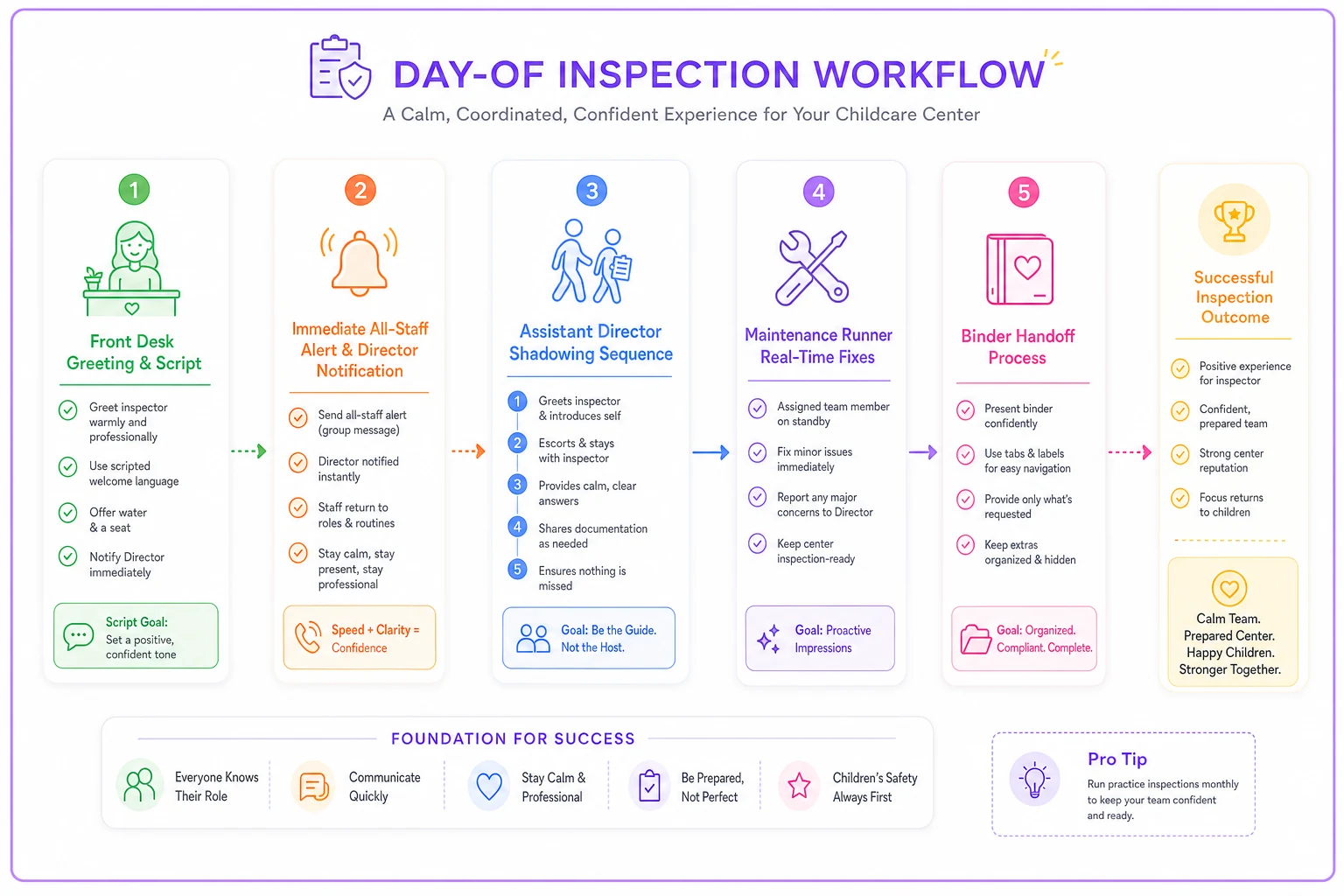
A quick visual to show the flow from front desk to shadowing to runner actions during an inspection.
Room-by-room readiness beyond the obvious
Infant rooms get the most scrutiny. Beyond the basics (crib spacing, bottle labeling), inspectors focus on sleep positioning documentation, individual feeding plans, and whether high chair safety straps actually function. That beautiful painted handprint project on the wall? They're checking if the paint was non-toxic and whether you have written parent permission for the activity. The evacuation crib better roll smoothly and fit through the door — some inspectors will ask staff to demonstrate.
Toddler rooms trip up centers most often in transition spaces. The bathroom area needs child-height soap dispensers that actually have soap, paper towels kids can reach, and a toilet training chart that doesn't violate privacy by displaying which children had accidents. Check whether your cubby area creates blind spots where supervision gets compromised. The sensory table needs documentation showing when it was last sanitized and what cleaning product was used.
Preschool rooms face the most curriculum documentation challenges. Inspectors want lesson plans that match what's actually happening — not the perfect plans you created and never followed. They're checking for developmental appropriateness too. That worksheet packet might violate your state's guidelines on academics for four-year-olds. Your dramatic play area needs to reflect diversity in materials and avoid gender stereotyping that some states now actively cite for.
The kitchen gets inspected like a restaurant, not a home kitchen. Your cook needs to show a current food handler certification, demonstrate proper temperature logging, and explain allergy prevention protocols. The menu posted on the wall better match what's actually being served today. The dishwasher needs to reach sanitizing temperature with test strips to prove it.
Outdoor spaces reveal maintenance patterns. Inspectors check whether your playground surface depth meets requirements (usually 9–12 inches of mulch or 6 inches of sand), whether fall zones overlap, and if shade structures are properly anchored. They're looking at fence integrity, gate latches children can't open, and whether your bike path creates supervision challenges.
The follow-up most centers mess up
Within 24 hours of inspection, hold your debrief. Not a blame session — a process review. Which preparations worked? Where did you scramble? What did the inspector focus on that surprised you? Document these patterns. Inspectors often rotate every two to three years, and each one has different focus areas worth tracking over time.
Build your correction timeline immediately. If you received violations, don't just fix them — embed prevention into your regular operations. That missing documentation citation? Add it to someone's weekly checklist. The ratio violation during staff breaks? Restructure the break schedule with overlapping coverage. The cleaning supplies stored too low? Install a new locked cabinet this week, not eventually.
Add inspector focus areas to a running log after each visit to identify rotating priorities quickly.
The part most centers skip: thank your staff with specifics. Not "great job everyone" but targeted recognition. "Maria, the way you handled questions about our curriculum was exactly right." "James, thank you for catching that the toilet paper was running low and restocking before it became an issue." That specificity reinforces the behaviors you need repeated.
Update your operational calendar for next time. Your state might inspect annually, but your internal inspection should happen quarterly — same forms, same process, same role assignments. When inspection prep becomes part of regular operations rather than a special event, your stress levels drop and your quality scores improve consistently.
Beyond compliance to operational consistency
The best centers stop viewing licensing inspections as external validation and start using them as operational checkups. Your licensing inspection checklist daycare preparation shouldn't feel like cramming for a test — it should feel like showing off what's already happening every day.
This shift happens when you build inspection readiness into daily workflows. Morning classroom checks that mirror inspection forms. Documentation updates that happen immediately, not eventually. Staff training that includes inspection scenarios and appropriate responses. When those elements become routine, inspections stop being events.
Centers that maintain strong inspection records consistently don't necessarily have more resources or better staff. They have better systems. They've turned periodic chaos into predictable, manageable workflows that their teams can execute without stress. Their month-before, week-before, and day-of checklists aren't emergency protocols — they're just how things run.
The timeline and role clarity outlined here takes roughly 20 hours of total staff time spread across a month. Compare that to the 40–60 hours centers typically burn scrambling in the week before an inspection, plus the additional time dealing with violations after. More importantly, it reduces staff anxiety, prevents the temporary quality drops that happen during inspection panic, and builds real confidence in your systems.
When your licensing specialist pulls into the parking lot next time, the goal is that your first thought is "we're ready" — not "oh no." That confidence comes from preparation, clear roles, and systems that make inspection readiness a normal part of operations rather than a periodic scramble.
Ready to elevate your childcare management?
Join hundreds of childcare providers using Totsyly to save time, improve communication, and grow their centers.